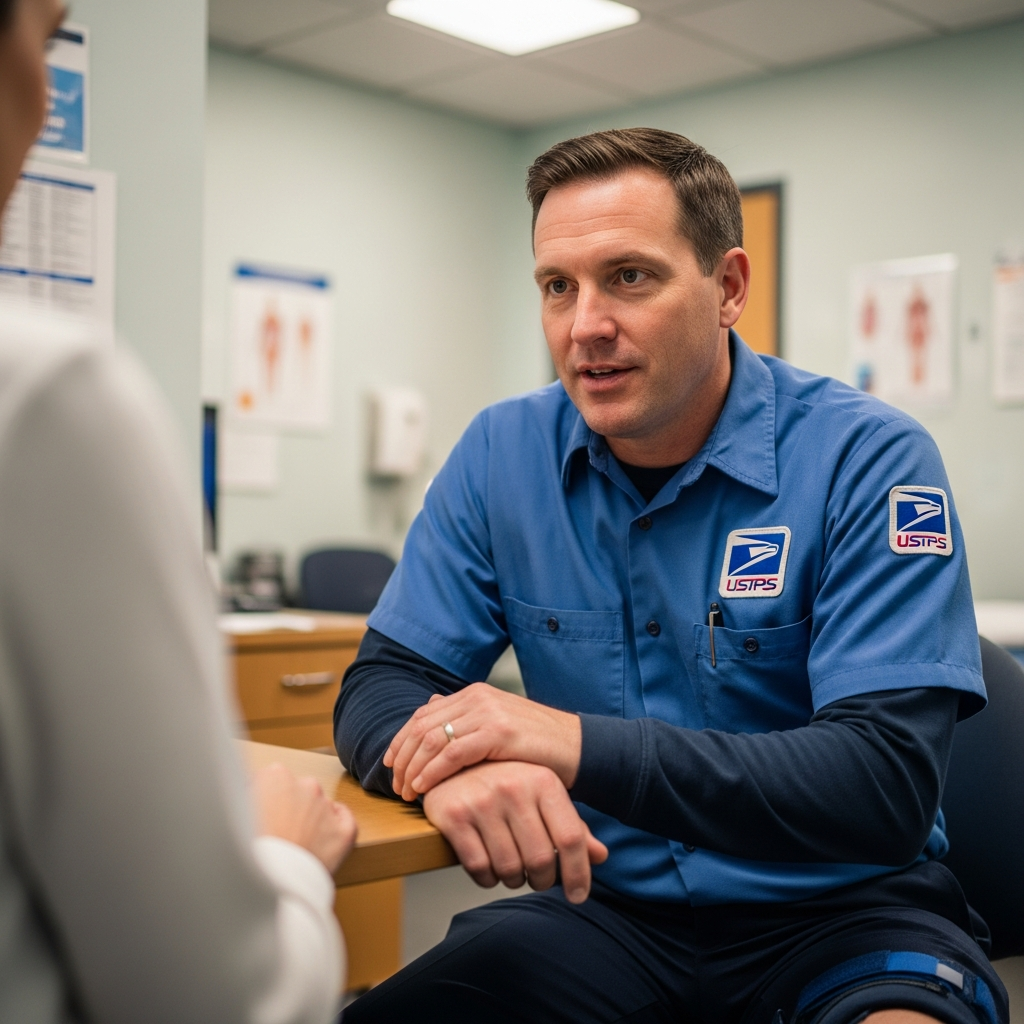
Miami OWCP Forms Guide for Federal Employees

Picture this: you’re a federal employee working out of one of Miami’s busy postal facilities, federal courthouses, or VA medical centers. You’ve just hurt your back lifting a package, or maybe you’ve been dealing with a nagging wrist injury from months of repetitive tasks. Your supervisor hands you a stack of paperwork and says something like, “you’ll need to fill these out.” And you stare at the forms – CA-1, CA-2, CA-16, OWCP this, DOL that – and suddenly the injury itself feels like the *easy* part.
Yeah. We know that feeling.
Here’s the thing nobody tells you upfront: the paperwork isn’t just administrative busywork. It’s actually the foundation of your entire workers’ compensation claim. Get it right, and you’ve protected your income, your medical care, and your peace of mind while you recover. Get it wrong – miss a deadline, use the wrong form, leave a section vague – and you could be fighting an uphill battle to get benefits you absolutely deserve. That’s not meant to scare you. It’s just the reality of how the Office of Workers’ Compensation Programs (OWCP) operates.
And if you’re working in Miami specifically, there’s a whole extra layer to navigate. You’ve got the Jacksonville district office handling claims for South Florida federal employees, unique considerations around Florida’s medical provider networks, bilingual documentation needs that sometimes complicate things further, and a local federal workforce that spans everything from Customs and Border Protection agents to Social Security Administration staff to Postal Service workers. The situation looks different here than it does for a federal employee in, say, Minneapolis. Not harder necessarily – just *specific*. And specifics matter enormously when you’re dealing with federal bureaucracy.
Most federal employees – honestly, the vast majority – don’t think about OWCP forms until they desperately need them. That makes sense. You’re not supposed to be an expert in federal workers’ comp law. You’re supposed to be doing your job. But when an injury happens, suddenly you’re expected to understand a system that even experienced HR professionals sometimes find confusing. The learning curve is steep, the deadlines are unforgiving, and the stakes are genuinely high.
What does “high stakes” actually mean here? We’re talking about your ability to pay rent in one of the most expensive cities in Florida. We’re talking about whether you can get the specialist your injury actually requires without fighting an insurance battle first. We’re talking about wage-loss compensation that could mean the difference between financial stability and real hardship while you’re out of work. This isn’t abstract. It’s your life.
So that’s exactly why we put this guide together.
What you’re about to read is a plain-English breakdown of the OWCP forms that matter most to Miami-area federal employees – what they are, when you use them, what mistakes trip people up most often, and how to approach the whole process without losing your mind. We’ll walk through the difference between traumatic injury claims and occupational disease claims (it matters more than you’d think), explain the timelines you absolutely cannot afford to miss, and give you a realistic picture of what happens after you submit your forms.
Actually, that reminds me of something worth mentioning upfront – this guide isn’t meant to replace legal advice or the guidance of a qualified OWCP attorney if your case is complex. Think of it more like… that knowledgeable friend who’s been through the system and can help you walk in prepared. Sometimes that’s all you need. Other times, you’ll realize your situation calls for professional backup, and we’ll flag those moments as we go.
Whether you’re a brand-new federal employee who just got hurt and genuinely doesn’t know where to start, or you’ve been dealing with a claim for months and feel like things have gone sideways, or you’re just the kind of person who likes to understand a system *before* you need it – there’s something here for you.
Miami’s federal workforce deserves to understand the protections available to them. You’ve done the work. You’ve paid into this system. You’ve earned the right to navigate it confidently.
Let’s make that happen.
What OWCP Actually Is (And Why It’s Not What Most People Think)
The Office of Workers’ Compensation Programs – most people just call it OWCP – is the federal agency that handles work-related injury and illness claims for federal employees. It sits under the Department of Labor, which already confuses some people because your injury happened at your *federal job*, so… why isn’t your own agency handling it? Valid question. The short answer is that OWCP acts as a neutral third party, which is actually a good thing for you as an employee.
Think of it like this: if you got hurt at a restaurant, you wouldn’t want the restaurant’s owner deciding whether your claim was valid. OWCP steps in as the impartial decision-maker between you and your employing agency.
Here’s the thing though – OWCP doesn’t just cover one type of claim. There are actually four separate compensation programs under its umbrella, and the one that applies to most Miami federal workers – postal employees, VA staff, TSA agents, federal courthouse employees, and everyone else – is called the Federal Employees’ Compensation Act, or FECA. That’s the program we’re really talking about throughout this guide.
The Forms Are the Claim (Seriously)
This is probably the most important thing to understand before you touch a single piece of paperwork. In the OWCP world, your claim essentially *is* your forms. Unlike some insurance situations where you can make a phone call, explain what happened, and someone sorts it out – OWCP doesn’t really work that way.
Every piece of information you submit, every medical detail, every description of how you got hurt – it all runs through official forms. Miss a field, use vague language, submit the wrong form for your situation, and your claim can get delayed, reduced, or denied. Not because your injury wasn’t real. Not because anyone is out to get you. Just because the system is bureaucratic in the most literal sense of that word.
It sounds frustrating, and honestly? It is. But once you understand the logic – that documentation is protection for *everyone*, including you – it starts to make more sense.
The Two Paths: Traumatic Injury vs. Occupational Disease
Here’s something genuinely counterintuitive that trips people up constantly. OWCP distinguishes between two fundamentally different types of claims, and they use different forms entirely.
A traumatic injury is exactly what it sounds like – something sudden happened. You slipped on a wet floor at the federal building, a box fell on you at the post office, you were in a vehicle accident on official duty. There’s a clear moment it happened.
An occupational disease or illness is the other path – and this is where it gets trickier. This covers conditions that developed *over time* because of your work. Carpal tunnel from years of repetitive keyboard work. Hearing loss from chronic noise exposure. A respiratory condition from working around certain chemicals. Even stress-related conditions can qualify under the right circumstances.
The distinction matters because the forms are different, the evidence requirements are different, and honestly, occupational disease claims tend to be more complex to document. Your doctor plays a bigger role in establishing the connection between your condition and your work environment. We’ll get into all of that – but for now, just know which category your situation falls into before you start filing.
Where Miami Fits Into All This
Federal workers in Miami file their claims through the Jacksonville district office of OWCP, which covers all of Florida. (Yes, Miami employees file through Jacksonville. Bureaucratic geography is its own thing.) This matters because timelines, communication preferences, and even some procedural nuances can vary by district.
Miami also has a uniquely large federal workforce – the port, immigration agencies, VA medical facilities, the federal courts, Social Security Administration offices, and more. Each of these workplaces comes with its own common injury patterns, which can actually inform how you frame your claim documentation. A postal carrier’s repetitive stress claim looks very different from a port inspector’s acute back injury, even if both end up on similar forms.
Actually, that’s worth pausing on – where you work and what you do matters throughout this whole process. Your employing agency is a participant in this process too, not just a bystander, and understanding that dynamic helps you navigate things a lot more smoothly.
Don’t Wait Until You “Feel Better” to File
Here’s the thing most federal employees in Miami get wrong – they wait. They think the injury will resolve on its own, or they don’t want to make waves at work, or they’re just not sure the paperwork is worth the hassle. Then three weeks pass, the pain is worse, and now they’re scrambling to reconstruct a timeline that should’ve been documented on day one.
The CA-1 (traumatic injury claim) has a strict 30-day window to preserve your rights to continuation of pay. Miss it and you’re not necessarily out of luck, but you’ve made everything significantly harder for yourself. File it even if you’re not sure how serious the injury is. You can always update the record – you can’t go back and create one.
The CA-2 Trap Nobody Warns You About
Occupational disease claims – those are your CA-2 forms – are where Miami federal employees run into the most trouble. Why? Because the “date of awareness” is genuinely confusing. OWCP considers your claim date to be when you first became aware that your condition was *work-related*, not when symptoms started.
So if you’ve had carpal tunnel building for two years but your doctor just connected it to your postal or TSA duties last month… that’s your clock-starting date. Write that down somewhere. Tell your treating physician to document that conversation explicitly in their notes. It matters more than most people realize.
Actually, that reminds me – get a copy of every single thing your doctor writes. Every visit. Every note. Miami has a lot of federal facilities and a lot of rotating staff, and records have a way of getting… fragmented. Don’t assume the paper trail is taking care of itself.
Your Supervisor’s Signature Isn’t Optional
The Form CA-1 requires your supervisor’s signature, and this is where things can get awkward – especially if there’s any tension around how the injury happened. Here’s the reality: your supervisor is legally required to complete their section. They don’t have to agree with your account of events. Their job is to sign and note any discrepancies, not to approve or deny your claim. That’s OWCP’s job.
If a supervisor refuses to sign or delays unreasonably, document that too. Send a follow-up email asking for the completed form by a specific date. That email creates a paper trail that protects you. And know this – you can still submit the form to OWCP without supervisor sign-off if they’re being obstructive. Note the refusal and submit anyway.
The Miami District Office Isn’t Your Only Option
A lot of employees don’t realize that the Jacksonville OWCP district office handles Miami-area federal workers. You’re not walking into a local office around the corner. Most of your claim interaction happens through mail, fax, or the ECOMP system online – which, honestly, is a better route anyway because it creates automatic timestamps on everything you submit.
Use ECOMP. Seriously. It’s not the most intuitive system ever built, but submitting through it means you have proof of exactly when your claim landed. Faxes get lost. Mailed forms get delayed. Digital submission is your friend here.
Medical Evidence Is the Heartbeat of Your Claim
This is the part people gloss over because they assume the diagnosis does the work. It doesn’t. OWCP needs your physician to connect the dots – specifically stating that your work duties caused or aggravated the condition. A diagnosis alone isn’t enough. “Patient has a herniated disc” helps nobody. “Patient’s herniated disc is causally related to repetitive heavy lifting required in their duties as a mail carrier” – *that’s* what moves a claim forward.
If your current doctor isn’t writing that kind of language, find one familiar with federal workers’ compensation cases. In Miami, there are physicians who regularly treat federal employees and know exactly what OWCP needs to see. Ask around through your union rep or coworkers who’ve been through the process.
Keep a Personal Claim Log
Buy a notebook – a physical one – and start logging everything the day you file. Dates you submitted forms, names of people you spoke to, reference numbers, what you were told. OWCP has a lot of moving parts and the left hand doesn’t always know what the right hand is doing.
When a claim gets lost or disputed, the person with the most detailed records usually wins.
The Paperwork Maze Is Real – Here’s Where People Get Lost
Let’s be honest. Federal workers’ comp paperwork is genuinely difficult, and anyone who tells you otherwise is either lying or has never actually done it. The forms themselves aren’t necessarily complicated in isolation, but when you’re dealing with a fresh injury, pain, work pressure, and a system that feels designed to confuse you… it’s a lot.
Here are the places where Miami federal employees consistently run into trouble – and what actually helps.
Deadline Confusion (The 30-Day Trap)
This one catches people constantly. You have 30 days from your injury date to submit Form CA-1 for traumatic injuries, and that clock doesn’t care that you thought the injury would get better on its own, or that your supervisor said “let’s wait and see,” or that you were busy. It just keeps ticking.
What makes this worse in Miami is that many federal workplaces – particularly postal facilities, VA medical centers, and federal courthouses – have informal cultures where reporting injuries feels awkward or even discouraged. So employees wait. And waiting is expensive.
The solution here is simple to say and hard to do: report immediately, even if you’re not sure how serious it is. Filing a CA-1 doesn’t mean you’re committing to anything. You’re just creating a record. You can always decide later not to pursue the claim. You cannot, however, go back in time and file on day 47.
The “I’ll Just Describe It Generally” Problem
Form CA-1 asks you to describe your injury in detail – how it happened, what body parts are affected, exactly what you were doing. Vague answers like “hurt my back lifting” or “fell at work” get claims delayed or questioned, sometimes for months.
Think of it this way: the person reviewing your claim has never met you and never will. Your words are all they have. “I was lifting a mail tray weighing approximately 40 pounds from a conveyor belt at hip height, twisted to my right, and felt immediate sharp pain in my lower back” tells a story. “Hurt my back at work” is a puzzle they’ll need to investigate.
Write it out before you transfer it to the form. Be specific about time, location, weight, movement, what you heard or felt, and what happened immediately after.
Getting the Medical Evidence Right
Here’s where a lot of Miami claims quietly fall apart. OWCP doesn’t just want a doctor’s note – they want documentation that directly connects your injury to your federal employment. That connection has to be explicit and it has to come from a physician.
What tends to happen is people see whatever doctor is convenient, get treated, and assume that’s enough. But if your physician’s report doesn’t specifically state that your work activities caused or significantly contributed to your condition, the claim hits a wall. Actually, it doesn’t just hit a wall – it gets denied, and then you’re looking at an appeals process that can drag on for a year or more.
The practical fix? When you see your doctor, explain clearly that this is a workers’ comp claim and that you need them to address causation in writing. Some doctors are familiar with OWCP requirements. Many aren’t. Being upfront saves everyone time.
Supervisor Signature Delays
You need your supervisor to complete Part C of the CA-1. Sounds simple. In practice? Supervisors go on leave, get transferred, claim they’re not sure how to fill it out, or – and this does happen – drag their feet for reasons that probably aren’t in your best interest.
You are legally entitled to file your CA-1 even without that signature. If your supervisor won’t complete their portion within a reasonable timeframe, file anyway and note the circumstances. Document your attempts to get it signed. The claim can still move forward.
The Follow-Through Phase
Getting the initial claim submitted feels like crossing a finish line. It’s not – it’s more like crossing the starting line. OWCP will likely request additional information, send forms for your physician to complete (like the CA-17 for work ability), and need periodic updates.
Missing these follow-up requests is probably the single biggest reason approved claims get suspended or closed prematurely. Set reminders. Keep copies of everything you send. If you’re mailing anything important, use certified mail with a return receipt so you have proof it was received.
The system isn’t designed to be user-friendly. Knowing that going in – and staying organized anyway – makes a real difference.
What to Actually Expect (And When to Worry)
Let’s be honest with you here – the OWCP process is slow. Like, genuinely, frustratingly slow. And if nobody warns you about that upfront, it can feel like something is wrong when really you’re just… waiting. Normally.
Most initial claims take anywhere from 30 to 90 days just to get an initial decision. Some take longer. That’s not a failure on your part, and it’s not necessarily a sign that your claim is in trouble. It’s just the reality of a federal bureaucratic system processing thousands of claims at once. Miami’s district office handles cases across Florida and beyond, so the volume alone can create delays that have nothing to do with your specific situation.
So if you filed two weeks ago and haven’t heard anything? That’s normal. Take a breath.
The Typical Timeline Breakdown
Here’s a rough sense of how things tend to unfold – though your situation may vary depending on injury type, documentation, and whether any additional information gets requested.
Days 1-14 after filing: Your claim gets assigned a case number and enters the queue. You should receive an acknowledgment, but don’t panic if it takes a couple of weeks. Keep that case number somewhere safe – you’ll need it for every single follow-up call.
Weeks 2-8: This is the quiet phase, and it’s genuinely uncomfortable. OWCP is reviewing your forms, contacting your employer for their side of things, and possibly reaching out to your medical provider. You might hear nothing. That doesn’t mean nothing is happening.
Around the 30-60 day mark: You may receive a request for additional information – maybe clarification on the accident description, more detailed medical records, or a statement from a witness. Respond to these requests as quickly as you possibly can. Delays in responding basically pause your clock.
60-90+ days: An initial decision typically comes somewhere in this window. It could be approval of your medical coverage, a request for an independent medical examination, or – and this is important to be prepared for – a denial.
If You Get Denied, That’s Not the End
Honestly, a lot of first-time OWCP claims get denied or disputed, especially if the paperwork had gaps or the injury’s connection to work wasn’t crystal clear. It stings, but it’s not over. You have the right to appeal, and many cases that get denied initially are approved on reconsideration when stronger documentation is submitted.
If you’re denied, you’ll get a written explanation of why. Read it carefully – actually read every word, not just the first line. The reason matters enormously because it tells you exactly what’s missing or disputed.
This is often the point where getting some help makes sense. Whether that’s an attorney who specializes in federal workers’ comp, a union rep, or an OWCP specialist – having someone in your corner who speaks this particular bureaucratic language can make a real difference.
Keeping Your Case Moving Forward
While you’re waiting, there are things you can do that genuinely help. Keep every appointment with your treating physician. Gaps in medical treatment are one of the most common reasons claims get complicated – if you miss appointments, OWCP can argue your injury isn’t as serious as claimed, or that it’s resolved.
Document everything. Symptoms that come and go, how the injury is affecting your daily work life, anything your doctor says – write it down with dates. Your memory six months from now won’t be as clear as you think.
Stay in communication with your supervisor and your agency’s workers’ comp coordinator. You don’t have to navigate this completely alone, and the coordinator in particular has a job that involves helping you through this process.
A Realistic Mindset for the Road Ahead
This process rewards patience and organization more than anything else. It’s not glamorous advice, but it’s true. The employees who do best tend to be the ones who file promptly, respond quickly to requests, follow through with medical care consistently, and don’t let paperwork pile up.
It can feel like the system isn’t built for you – and sometimes it genuinely isn’t easy to navigate. But federal workers’ comp protections exist for real reasons, and you have legitimate rights here. The process being difficult doesn’t mean your claim isn’t valid.
Give yourself grace. Ask for help when you need it. And keep copies of absolutely everything.
You’ve made it through a lot of information – and honestly, federal workers compensation paperwork is one of those things that nobody *wants* to become an expert in. The fact that you’re here, reading this, doing the research? That already puts you ahead of most people who get hurt on the job and just… hope things work out. They often don’t, not without a little guidance.
Here’s the thing about OWCP forms that trips people up the most – it’s not usually one big mistake. It’s a series of small ones. A missed deadline here, an incomplete medical narrative there, a checkbox left blank because nobody explained what it actually meant. And before you know it, a legitimate claim gets delayed for months or denied entirely. That’s not a paperwork problem. That’s a real-life problem that affects your income, your treatment, your stress levels, and honestly, your whole family.
You Don’t Have to Figure This Out Alone
Federal employees in Miami are dealing with something pretty unique – you’re navigating federal law while also trying to access care in a city that has its own rhythms, its own network of providers, its own logistical quirks. Finding an OWCP-authorized physician who actually understands how to document for federal claims? Not always simple. Knowing which forms belong at which stage of your claim? That takes experience, not just a quick internet search.
Which is why leaning on people who do this every day makes so much sense. Not because you’re not capable – you clearly are – but because you shouldn’t *have* to become a workers comp specialist just to get the medical care you’ve already earned.
What Good Support Actually Looks Like
A good OWCP-experienced provider isn’t just filling out forms. They’re documenting your injury in the specific language that OWCP reviewers need to see. They’re tracking deadlines alongside you. They understand the difference between a CA-1 and a CA-2 not just technically, but *practically* – in terms of what it means for your timeline and your treatment options.
That kind of support changes everything. It means fewer delays. Fewer requests for more information. Fewer nights wondering if your claim is just sitting in some pile somewhere, forgotten.
A Friendly Next Step, When You’re Ready
If any part of your situation feels confusing – whether you’re just starting a claim, dealing with a denial, struggling to find the right provider, or simply not sure what form you should have filed last month – please don’t sit with that uncertainty longer than you need to.
Our clinic works with federal employees in the Miami area regularly, and we genuinely understand the OWCP process from the medical side. We’re happy to answer questions, help you understand what documentation your claim actually needs, or simply point you in the right direction even if that direction isn’t us.
You got hurt doing your job. That matters. Your claim matters. And you deserve support from people who take both of those things seriously.
Reach out whenever you’re ready – no pressure, no obligation. Just a real conversation with people who want to help you get this right.