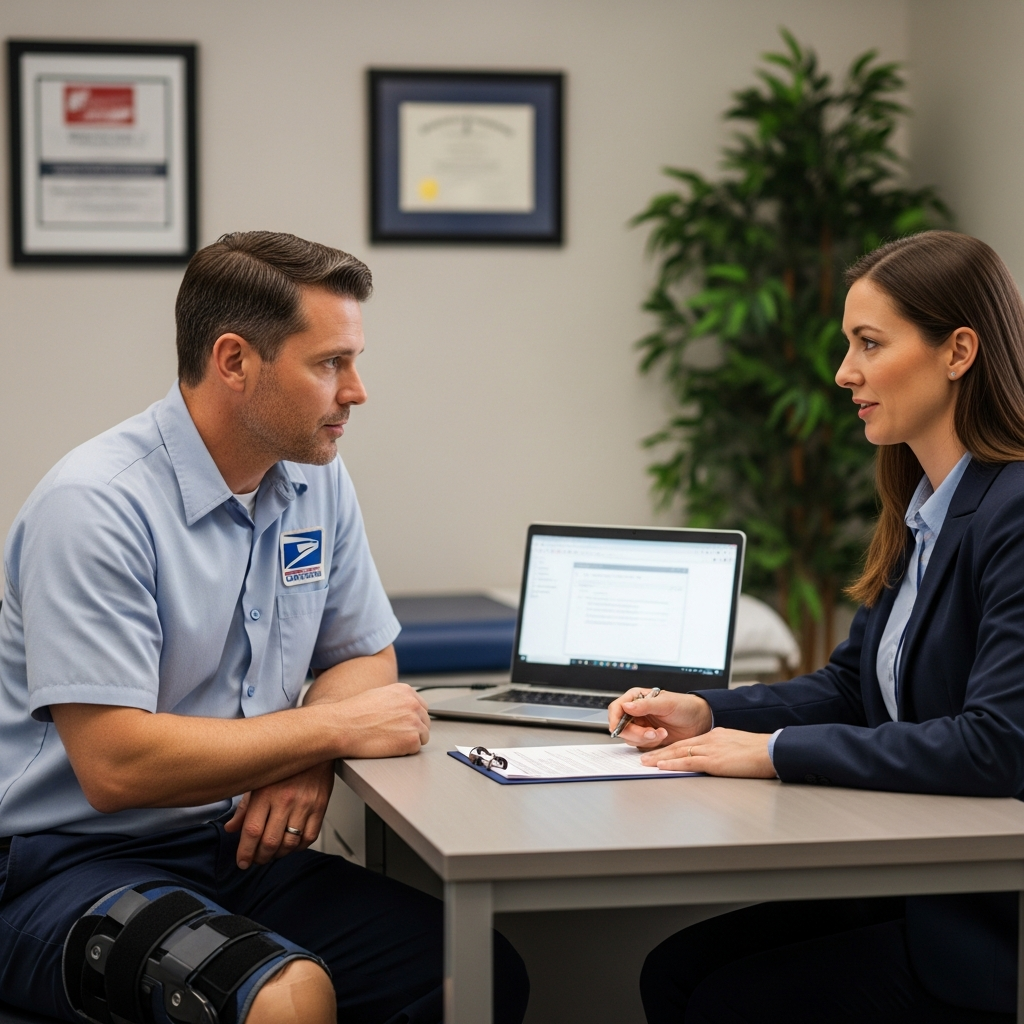
Miami Federal Workers: When to Visit OWCP Clinics

You’re rushing to catch the 8:15 AM Metrobus on Flagler Street when it happens – that sharp twist in your back that makes you freeze mid-stride. Or maybe it’s been building for weeks… the constant shoulder ache from hunching over your desk at the VA regional office, getting worse every day until you can barely lift your coffee mug without wincing.
Sound familiar? If you’re a federal worker in Miami, you’re definitely not alone in this. Between the long hours, the stress, and honestly – some pretty questionable ergonomics in those government buildings – workplace injuries are more common than anyone wants to admit. But here’s what makes it even more frustrating: when you do get hurt on the job, figuring out where to go for treatment can feel like navigating a maze blindfolded.
I’ve talked to countless federal employees who’ve been there. They know something’s wrong, they know it happened at work, but then comes that paralyzing moment of… wait, do I go to my regular doctor? The ER? That clinic my coworker mentioned? And what about all this OWCP paperwork everyone keeps talking about?
Here’s the thing – and this is where it gets really important for your wallet and your health – not every doctor’s office knows how to handle federal workers’ compensation claims. You could end up paying out of pocket for treatment that should be covered, or worse, getting subpar care from providers who don’t understand the unique needs of government employees. Trust me, I’ve seen people get stuck with thousands in medical bills simply because they didn’t know which doors to walk through.
That’s where Office of Workers’ Compensation Programs (OWCP) clinics come in. These aren’t just any medical facilities – they’re specifically designed to work with federal employees like you. They know the forms, they understand the process, and most importantly, they’re equipped to get you the care you need without the bureaucratic runaround.
But – and there’s always a “but,” isn’t there? – timing matters. A lot. When you visit an OWCP clinic can make the difference between a smooth claims process and months of headaches. Go too early, and you might not have all your ducks in a row. Wait too long, and you could be dealing with complications that could’ve been easily prevented.
Living and working in Miami adds its own layer of complexity to this whole situation. Our city’s unique mix of federal agencies – from the massive VA operations to Immigration and Customs Enforcement, from the National Weather Service hurricane center to the postal service facilities scattered across Dade County – means there’s a lot of variety in how workplace injuries happen and what kind of care you might need.
Plus, let’s be honest… Miami traffic isn’t doing anyone’s stress levels any favors, and those aging federal buildings with their vintage air conditioning systems (if you can call it that) aren’t exactly ergonomic wonderlands. Whether you’re dealing with repetitive stress from data entry, a slip and fall in a government facility, or something more serious, knowing when and where to seek treatment isn’t just helpful – it’s essential.
Over the next few minutes, we’re going to walk through exactly when you should be thinking about OWCP clinics. Not in some dry, policy-manual way, but in a practical, “what do I actually need to know” way. We’ll cover the warning signs that it’s time to seek specialized federal workers’ comp care, how to tell if your injury qualifies, and what to expect when you actually walk through those clinic doors.
We’ll also talk about timing strategies that can save you serious headaches down the road, red flags to watch out for, and honestly – some of the mistakes I’ve seen people make that you’ll definitely want to avoid. Because the last thing you need when you’re already dealing with a work injury is to make the whole situation more complicated than it needs to be.
Ready to take some of the mystery out of this process? Let’s figure out when OWCP clinics should be on your radar…
What Actually Is OWCP, Anyway?
Let’s be honest – OWCP sounds like alphabet soup, doesn’t it? The Office of Workers’ Compensation Programs… it’s one of those government acronyms that makes your eyes glaze over. But stick with me here, because understanding this system could literally save your career and your health.
Think of OWCP like your workplace insurance safety net – except it’s specifically designed for federal employees who get hurt or sick because of their job. You know how your car insurance kicks in after an accident? OWCP works similarly, but for work-related injuries and illnesses. The key phrase there is “work-related” – and honestly, that’s where things get interesting (and sometimes frustrating).
The Miami Federal Worker Reality Check
Here in Miami, we’ve got this unique mix of federal workers – from TSA agents at MIA dealing with the constant stress and physical demands of airport security, to postal workers battling our brutal humidity while delivering mail, to park service employees at Everglades National Park facing everything from alligators to heat exhaustion.
Each of these jobs comes with its own health risks, and that’s exactly what OWCP is designed to address. But – and this is important – the system doesn’t automatically assume your health issue is work-related just because you’re a federal employee. You’ve got to prove the connection, which can feel like solving a puzzle sometimes.
When Work Hurts: The Coverage Spectrum
OWCP covers two main categories, and understanding the difference is crucial. First, there are traumatic injuries – think of a postal worker who slips on a wet floor and breaks their wrist, or a TSA agent who pulls their back lifting heavy luggage. These are sudden, obvious, “I can point to exactly when it happened” situations.
Then there’s the trickier category: occupational diseases. These develop over time… repetitive stress injuries from years of typing, hearing loss from working in noisy environments, or respiratory issues from exposure to chemicals. These cases can be harder to prove because the timeline isn’t as clear-cut.
Actually, that reminds me of something important – stress-related conditions fall into this second category, and they’re particularly relevant for Miami federal workers. The high-pressure environment of airport security, the physical demands of mail delivery in extreme heat, the emotional toll of certain government positions… these can all contribute to legitimate medical conditions that OWCP might cover.
The Clinic Connection
Now, here’s where OWCP clinics come into the picture. These aren’t just any medical facilities – they’re specifically authorized to treat federal workers under the OWCP system. It’s like having a mechanic who specializes in your particular car model versus going to a general repair shop.
When you visit an OWCP clinic, the doctors there understand the federal compensation system inside and out. They know what documentation is needed, how to properly code your visits, and most importantly, they can provide treatment without you having to navigate the usual insurance maze. The government pays the bills directly – no co-pays, no deductibles, no fighting with insurance companies about coverage.
But here’s the thing that trips people up: you can’t just walk into any clinic and say “bill OWCP.” The facility has to be authorized, and you typically need to go through proper channels first.
The Documentation Dance
This is probably the most counterintuitive part of the whole system – OWCP loves paperwork. Like, really loves it. Every appointment, every treatment, every conversation with your supervisor about your injury… it all needs to be documented properly.
Think of it like building a legal case (because in many ways, that’s exactly what you’re doing). You’re not just seeking medical treatment; you’re creating a paper trail that proves your condition is work-related and that you deserve ongoing care and compensation. It’s exhausting, honestly, especially when you’re already dealing with pain or illness.
The good news? OWCP clinics understand this documentation requirement better than anyone. They speak the language, they know what forms need to be filled out, and they can help guide you through the process. It’s like having a translator when you’re trying to navigate a foreign country – invaluable.
Your Rights (Yes, You Have Them)
One thing that often surprises federal workers is that OWCP isn’t doing you a favor by providing coverage – you’ve earned this protection. It’s part of your employment package, just like your health insurance or retirement benefits. You have the right to medical treatment, and in many cases, compensation for time off work due to your injury or illness.
Timing Your OWCP Visit Like a Pro
Here’s something most people don’t realize – Tuesday through Thursday mornings are your sweet spot for OWCP clinic visits in Miami. Monday mornings? Forget about it. Everyone’s trying to squeeze in after putting off their injury over the weekend, and Friday afternoons… well, that’s when you’ll sit there watching the clock tick while staff mentally check out for the weekend.
But here’s the real insider tip: if you can swing a 9 AM appointment on a Wednesday, you’re golden. The administrative staff has had their coffee, the doctors haven’t hit their afternoon slump yet, and your paperwork actually gets processed the same day instead of sitting in someone’s inbox until next week.
What to Bring (And What NOT to Bring)
Look, I’ve seen federal workers show up with grocery bags full of random medical documents dating back to 1987. Don’t be that person.
Your OWCP clinic visit checklist should include
– Your federal employee ID (obvious, but you’d be surprised) – The actual CA-1 or CA-16 form – not a photocopy of a photocopy – Any diagnostic images on CD/DVD (not just the reports) – A typed list of your current medications with dosages – Your supervisor’s contact information
And here’s what you should leave at home: that stack of internet printouts about your condition. Trust me, the doctors have seen WebMD warriors before, and it doesn’t speed things up.
Speaking the Right Language
When you’re explaining your injury or symptoms, specificity matters more than drama. Instead of saying “my back is killing me,” try “I have sharp pain in my lower left back that shoots down to my knee when I bend forward.” The difference? One gets you a thorough examination, the other gets you a skeptical look.
Here’s a trick I learned from a seasoned postal worker: keep a simple pain diary on your phone for three days before your appointment. Note when pain is worst, what triggers it, what helps. Takes two minutes a day, but it makes you sound like someone who takes their health seriously.
The Waiting Game Strategy
Miami OWCP clinics run notoriously behind schedule – it’s just reality. But you can use this time productively instead of doom-scrolling social media.
Bring a small notebook and jot down questions as you think of them. You know how your mind goes blank the second the doctor walks in? This prevents that. Also, if you notice other patients discussing similar injuries (and you will, because waiting rooms are like informal support groups), listen. You might learn about treatments or accommodations you hadn’t considered.
When to Push Back (Politely)
Sometimes you’ll encounter a doctor who seems rushed or dismissive. Maybe they’re having a bad day, maybe they’re overbooked… but your injury deserves proper attention. Here’s how to advocate for yourself without being “difficult”
If an exam feels rushed, say something like: “Doctor, I want to make sure you have all the information you need. Can I describe when the pain is worst?” Most physicians will slow down when they realize you’re engaged and prepared.
And if you’re not getting clear answers about your prognosis or treatment plan, don’t leave confused. Ask directly: “What should I expect for recovery time?” or “Are there work restrictions I should know about?” These aren’t pushy questions – they’re practical ones that help you plan your life.
The Follow-Up Game
Here’s where most people drop the ball completely. You leave your OWCP appointment feeling relieved that it’s over, then… nothing. You wait. And wait.
Don’t do this. Get the direct phone number for the clinic (not the main switchboard) and a name – even if it’s just “ask for Maria at the front desk.” Call within 48 hours if you don’t hear about next steps. Not to be annoying, but to stay on top of your case.
Most OWCP claims get delayed because of missing paperwork or miscommunication between the clinic and your employing agency. A quick follow-up call can catch these issues before they turn into months-long delays.
And keep your own records. Snap photos of forms, save emails, write down who you spoke with and when. Sounds paranoid? Maybe. But it’s also smart, because six months from now when someone asks “didn’t you submit that form already?” you’ll have proof.
The bottom line: treating your OWCP clinic visit like any other medical appointment is a mistake. This isn’t just about your health – it’s about your livelihood, your benefits, your future. A little extra preparation goes a long way.
The Paperwork Maze That Makes You Want to Scream
Let’s be real – OWCP paperwork feels like it was designed by someone who’s never actually been injured at work. You’re dealing with pain, maybe medication side effects, and suddenly you’re supposed to become a forms expert? That’s… not exactly fair.
The biggest trap people fall into is thinking they can wing it. They’ll scribble something quick, miss a crucial detail, and then wonder why their claim gets delayed for weeks. Here’s what actually works: treat that initial CA-1 or CA-2 form like it’s worth thousands of dollars – because it is. Take your time. If your hand’s shaking from pain or you can’t think straight, ask someone you trust to help you fill it out.
And here’s something nobody tells you – keep copies of everything. Not just the final forms, but your drafts, your notes, even that napkin where you wrote down your supervisor’s response when you reported the injury. I’ve seen too many people get caught off guard months later when OWCP asks for details they can’t remember.
When Your Supervisor Suddenly Goes MIA
This one’s frustrating in a special way. One day you’re reporting your injury, the next day your supervisor is suddenly “in meetings” every time you need their signature. Or worse – they’re questioning whether your injury really happened at work.
Don’t take it personally (though I know that’s easier said than done). Some supervisors panic when workers’ comp comes up because they’re worried about their department’s safety record. Others just… don’t know what they’re supposed to do.
Your solution? Document everything. Send that email requesting their signature, and when they don’t respond, send another one. Keep your union rep in the loop if you have one. And remember – you have rights here. Your supervisor can’t just ignore you because workers’ comp makes them uncomfortable.
Actually, that reminds me… if you’re getting pushback, sometimes going through HR instead of your direct supervisor can smooth things out. They deal with this stuff more often and usually know the process better.
The Waiting Game That Tests Your Sanity
OWCP moves at the speed of… well, government. Your claim might take weeks or months to process, and during that time, you’re stuck in this weird limbo where you don’t know if your medical bills will get covered or if you’ll get wage compensation.
The hardest part? You can’t just sit there and wait. You need to stay on top of your medical care, keep working if you can (and your doctor says it’s okay), and somehow not lose your mind in the process.
Here’s what helps: create a simple tracking system. Could be a notebook, could be a phone app – doesn’t matter. Just somewhere to jot down dates, phone calls made, documents sent. When you call OWCP (and you will call them), having this information at your fingertips makes you sound organized and helps you get better responses.
When the Approved Doctor Isn’t… Great
This is delicate territory, but it needs to be said. Sometimes the doctor OWCP approves isn’t the right fit. Maybe they don’t specialize in your type of injury, maybe they’re dismissive, or maybe they just don’t seem to “get” what you’re going through.
You’re not stuck forever with a doctor who isn’t helping you heal. OWCP has a process for changing physicians, but – and this is important – you can’t just switch on your own without approval. That’s a fast track to having your benefits questioned.
Instead, document your concerns. Are they not addressing your pain? Missing follow-up appointments? Not familiar with your type of injury? Present these issues to OWCP professionally and request a change. Be specific about what’s not working and, if possible, suggest an alternative doctor who accepts OWCP patients.
The Money Stress That Keeps You Up at Night
Let’s talk about the elephant in the room – the financial squeeze. Even when everything goes right, there’s often a gap between when you’re injured and when compensation kicks in. Bills don’t stop just because you’re hurt.
If you’re facing immediate financial hardship, don’t suffer in silence. Many federal employees have access to employee assistance programs that can provide short-term financial counseling or emergency funds. Your union might have resources too.
And while you’re waiting for OWCP compensation, keep detailed records of every expense related to your injury – medical co-pays, parking fees for doctor visits, even mileage. Some of these costs might be reimbursable, but only if you can prove them.
The key is staying proactive while being patient. I know that sounds contradictory, but that’s the OWCP reality – you need to advocate for yourself without burning bridges.
What to Expect During Your First Visit
Walking into an OWCP clinic for the first time can feel a bit like entering uncharted territory. You’re probably wondering what questions they’ll ask, how long you’ll be there, and honestly? Whether they’ll actually believe that your back pain is real (spoiler alert: good doctors absolutely will).
Most initial appointments run about 45 minutes to an hour. The physician will want your complete work history – not just the incident that brought you in, but how long you’ve been with the agency, what your daily tasks involve, any previous injuries. Think of it like detective work, but the friendly kind where someone’s genuinely trying to help you feel better.
They’ll also dive into your medical history. Yes, even that knee surgery from 2015 might be relevant if you’re dealing with hip pain now. Our bodies are surprisingly connected – kind of like that annoying Christmas light strand where one bulb affects the whole string.
The Reality of Recovery Timelines
Here’s where I need to be straight with you: federal injury cases aren’t quick fixes. While a minor strain might resolve in a few weeks, more complex issues – especially if they involve surgery or chronic conditions – can take months or even years to reach maximum medical improvement.
I know that’s not what you want to hear when you’re dealing with pain and paperwork stress. But understanding realistic timelines actually helps reduce anxiety. When you know that feeling 60% better after two months of treatment is normal progress (not a sign that something’s wrong), you can focus on healing instead of worrying.
Most patients see some improvement within 4-6 weeks of starting treatment, though “improvement” might mean sleeping better before it means lifting boxes again. Recovery isn’t always linear either – you might have great days followed by setbacks. That’s frustrating but completely normal.
Navigating the Documentation Dance
Every OWCP clinic visit generates paperwork. Progress notes, treatment recommendations, work capacity evaluations – it’s like a paper trail of your healing process. Some of this goes directly to OWCP, some gets copied to you, and some stays in your medical file.
Don’t worry about understanding every medical term or code. What matters is that your symptoms, limitations, and progress are accurately documented. If something doesn’t sound right during your appointment, speak up. Actually, let me rephrase that – definitely speak up. These records become the foundation for your entire claim.
Your doctor will also provide work capacity evaluations – basically their professional opinion about what you can and can’t do job-wise. These aren’t punishment recommendations; they’re protective guidelines to prevent re-injury while you heal.
Building Your Treatment Team
Most federal workers end up working with multiple providers through OWCP clinics. You might see the primary physician, a physical therapist, maybe a specialist or two. Sometimes it feels like you’re explaining your story over and over again (because, well, you are).
Each provider brings different expertise to your recovery. The orthopedist understands your shoulder mechanics, the physical therapist knows how to rebuild strength safely, and the case coordinator… actually helps coordinate everything so you don’t have to juggle a dozen different appointments and authorizations.
When Things Don’t Go as Expected
Sometimes OWCP denies treatment recommendations. Sometimes referrals take forever to get approved. Sometimes – and this is the hard truth – your first provider isn’t the right fit. These hiccups don’t mean your case is doomed or that you’re being difficult.
You have options. You can request a second opinion, appeal decisions, or ask for a different provider within the network. The process might feel bureaucratic (because it is), but persistence often pays off. Document everything, keep copies of all correspondence, and don’t hesitate to ask questions when things aren’t clear.
Moving Forward with Realistic Hope
Recovery through OWCP isn’t just about getting better – it’s about getting better within a complex federal system. That adds layers of complexity that your neighbors dealing with regular health insurance don’t face.
But here’s what I’ve seen after years of working with federal employees: most people do get better. They return to work, or find new work they can do, or reach a place where their pain is manageable and their life feels normal again.
The key is patience with the process and advocacy for yourself. You know your body better than anyone else, and good OWCP providers want to hear that knowledge. Your recovery matters – not just to you and your family, but to a system designed to support federal workers when they need it most.
You know what? Navigating the federal workers’ compensation system doesn’t have to feel like you’re lost in a bureaucratic maze without a map. Sure, it’s complex – there are forms, deadlines, approved providers, and processes that can make your head spin. But here’s the thing… you’re not in this alone.
The beauty of OWCP clinics is that they’re specifically designed with you in mind. These aren’t just any healthcare facilities – they understand the unique challenges federal employees face. They know you’re dealing with work-related injuries while trying to keep up with your job responsibilities. They get that you might be stressed about time off, worried about your benefits, or frustrated with paperwork that seems to multiply faster than rabbits.
Finding Your Support Network
Think of your OWCP healthcare team as your personal pit crew. Just like race car drivers need skilled mechanics who understand every bolt and system in their vehicle, you need medical professionals who truly understand the federal system. They speak the language of Form CA-1s and CA-2s, they know how to document your treatment properly, and – perhaps most importantly – they’re invested in getting you back to feeling your best.
Whether you’re dealing with a sudden workplace injury that has you scrambling to understand your options, or you’ve been managing a chronic condition that’s been slowly affecting your work performance, timing really does matter. The sooner you connect with the right resources, the smoother your path to recovery tends to be.
And let’s be honest – you’ve probably been putting this off, haven’t you? Maybe you’re hoping that nagging back pain will just… disappear. Or perhaps you’re worried about appearing weak to your supervisors. Here’s a gentle reality check: taking care of your health isn’t weakness. It’s actually one of the smartest career moves you can make. A healthy, pain-free employee is a productive, engaged employee.
Taking That Next Step
The federal workers’ compensation system exists because your government recognizes that sometimes work takes a toll on your body. You’ve earned these benefits through your service, and there’s absolutely no shame in using them when you need them.
If you’re reading this and thinking, “This sounds like exactly what I need, but I don’t even know where to start,” – well, that’s exactly why we’re here. Sometimes the hardest part isn’t dealing with the injury itself; it’s figuring out how to navigate the system designed to help you.
You don’t have to figure this out on your own. Whether you need help understanding your OWCP benefits, finding the right clinic, or just want to talk through your options with someone who genuinely cares about your wellbeing, we’re here to support you.
Take that first step. Reach out. Ask questions. Your future self – the one who’s pain-free and thriving at work – will thank you for taking action today. Because you deserve to feel your best, both on and off the job. And honestly? We’d love nothing more than to help you get there.