Miami Beach DOL Work Comp: What Injured Federal Workers Should Know

The coffee was still warm in your hands when it happened. Maybe you were rushing to catch the elevator at the federal building, juggling your morning latte and that stack of case files. Or perhaps you were lifting boxes in the warehouse, doing what you’ve done a thousand times before. One moment everything’s normal – just another Tuesday in your federal job – and the next? You’re staring at a workers’ compensation claim form that might as well be written in ancient Greek.
If you’re a federal worker in Miami Beach dealing with a work injury, you’ve probably discovered something pretty frustrating: the rules are different for you. Not just a little different – completely different. While your neighbor who works for a private company deals with Florida’s state workers’ comp system, you’re navigating something called the DOL (Department of Labor) system. And honestly? It can feel like you’ve been dropped into a parallel universe where nothing quite makes sense.
Here’s the thing that really gets me – and I’ve talked to hundreds of injured federal workers over the years – nobody explains this stuff clearly. You get handed forms with acronyms like FECA and OWCP, told to see specific doctors, and given deadlines that seem to come out of nowhere. Meanwhile, you’re dealing with pain, missed work, and that gnawing worry about whether your bills will get paid.
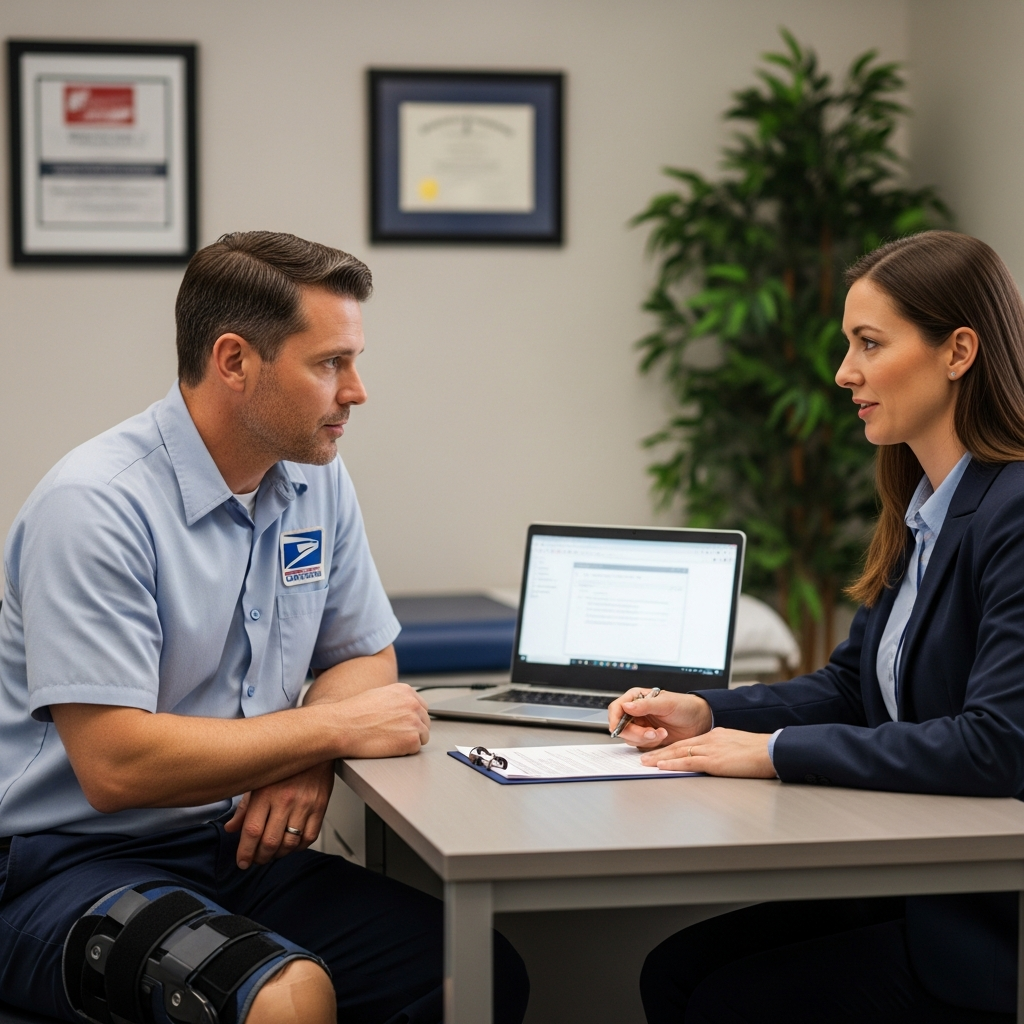
I remember talking to Maria, a postal worker who slipped on a wet floor at the Miami Beach post office. She spent three weeks thinking she was supposed to file with Florida’s workers’ comp system because… well, that’s what everyone talks about, right? Wrong. As a federal employee, she needed to file a completely different claim with completely different rules. Those three weeks of confusion? They almost cost her the compensation she deserved.
That’s exactly why understanding Miami Beach DOL workers’ comp matters so much to you personally. Whether you’re a TSA agent at Miami International, work at the federal courthouse downtown, or you’re with the Coast Guard – your path to getting help after a work injury is unique. And here’s what nobody tells you upfront: making the wrong move early on can seriously impact your benefits down the road.
The federal system has its quirks – some good, some… let’s just say challenging. On the plus side, federal workers’ comp benefits can be more generous than state benefits in many cases. You might be eligible for medical coverage that continues even after you return to work, and there are provisions for vocational rehabilitation that can actually be pretty comprehensive. But – and this is a big but – you have to know how to navigate the system correctly.
The deadlines alone are enough to make your head spin. You’ve got different timeframes for reporting injuries, filing claims, and requesting specific types of benefits. Miss one? You might find yourself in appeals hell, fighting for benefits that should have been automatic. And don’t get me started on the approved doctor situation – it’s not like you can just walk into any urgent care clinic in South Beach.
What really bothers me is how many federal workers I meet who’ve been struggling through this process alone, thinking they just need to figure it out as they go. You wouldn’t try to fix your car’s transmission with a YouTube video and a prayer, so why navigate federal workers’ comp without understanding the system?
That’s exactly what we’re going to tackle together. We’ll walk through the specific steps you need to take as a Miami Beach federal worker, from that first moment when you realize you’ve been injured through getting the medical care and compensation you deserve. You’ll learn about the doctors you can see (and the ones you can’t), how to properly document everything, and what to do when – not if, when – something goes sideways in the process.
Because here’s what I’ve learned after years of helping people through this: knowledge really is power when it comes to federal workers’ comp. The more you understand about how the system works, the better equipped you’ll be to get the benefits you’ve earned. And honestly? You shouldn’t have to become an expert in federal workers’ comp law just to get help after you’ve been hurt on the job.
Ready to demystify this whole process? Let’s get started.
Understanding Federal Workers’ Compensation – It’s Not What You Think
Here’s where things get a bit… well, weird. If you’re a federal employee who got hurt on the job, you might assume workers’ comp works the same way it does for everyone else. Spoiler alert: it doesn’t.
Think of it like this – while your neighbor who works at a regular company deals with state workers’ comp (which varies wildly from state to state, honestly), you’re playing by completely different rules. Federal workers fall under something called the Federal Employees’ Compensation Act, or FECA. It’s like being in an exclusive club… except nobody really explained the membership benefits clearly.
The Department of Labor’s Office of Workers’ Compensation Programs handles your case – not some state agency, not your regular insurance company. This can actually work in your favor, but it also means you’re navigating a system that most people (including some doctors and lawyers) don’t fully understand.
The OWCP Difference – Why Location Matters Less Than You’d Expect
Now, you might be wondering – “I work in Miami Beach, so doesn’t Florida law apply?” That’s… actually a really logical question that trips up tons of people. But here’s the thing: federal trumps state when it comes to your workers’ comp claim.
Whether you’re stationed at the Coast Guard base in Miami Beach, working for the postal service, or handling cases at the federal courthouse – your injury claim goes through the same federal system as a park ranger in Montana or a customs agent in Seattle. It’s oddly equalizing when you think about it.
The Miami Beach DOL office (that’s Department of Labor, by the way – not to be confused with the DMV or any other alphabet soup agency) processes claims for the region, but they’re following federal guidelines that are the same everywhere. Think of it like McDonald’s – the menu’s basically the same whether you’re on Ocean Drive or Main Street, USA.
FECA Benefits – More Generous Than You Might Expect
Here’s where federal workers’ comp actually shines – and this might surprise you. FECA benefits are typically more generous than what you’d get under most state systems. We’re talking about coverage for medical expenses without the usual insurance hassles, compensation for lost wages that can be pretty decent, and benefits that can continue for… well, potentially a very long time.
You get your medical bills covered completely – no co-pays, no arguing with insurance companies about whether that MRI was “really necessary.” Your doctors get paid directly by OWCP, which eliminates a lot of the usual medical billing nightmares. It’s like having a medical credit card with no limit… assuming OWCP approves the treatment, of course.
The Claims Process – Buckle Up, It’s a Journey
Filing a FECA claim isn’t exactly straightforward. Actually, let me be honest – it can be pretty confusing at first. You’ve got forms (oh, the forms!), deadlines that matter more than you might think, and a process that moves at… well, government speed.
The key forms you’ll encounter include the CA-1 (for traumatic injuries – like if you slipped on a wet floor) and the CA-2 (for occupational diseases or conditions that developed over time). Then there’s the CA-7 for claiming compensation, and honestly, the alphabet soup of forms can make your head spin.
But here’s what most people don’t realize – timing isn’t just important, it’s everything. You have specific windows for reporting your injury, filing your claim, and requesting various benefits. Miss a deadline, and you might be looking at complications that could’ve been easily avoided.
Working with Medical Providers – The Authorization Dance
One thing that catches federal workers off guard is how medical treatment works under FECA. Your doctor needs to be authorized by OWCP to treat your work-related condition. It’s not like regular health insurance where you can just show up anywhere and flash your card.
Think of it as a three-way conversation between you, your doctor, and OWCP. Sometimes this flows smoothly… and sometimes it feels like everyone’s speaking different languages. The good news? Once you’ve got an authorized treating physician who understands the federal system, things usually get much easier.
The tricky part is finding doctors who actually know how to work with OWCP. Not all medical providers are familiar with the federal system, and that can lead to delays, confusion, and frankly, some headaches you don’t need when you’re trying to recover from an injury.
Getting Your Claims Paperwork Right the First Time
Look, I’ve seen too many federal workers stumble right out of the gate because they rushed through their CA-1 or CA-2 forms. Here’s what nobody tells you – those forms aren’t just bureaucratic busy work. They’re your first impression, and trust me, you want it to be flawless.
When you’re filling out that CA-1 (for traumatic injuries), be ridiculously specific about the time, date, and exactly how the injury happened. Don’t just write “hurt my back lifting boxes.” Instead: “At approximately 2:30 PM on March 15th, while lifting a 40-pound package from floor level to waist height, felt immediate sharp pain in lower lumbar region.” The claims examiner reading this has probably seen hundreds of vague descriptions – yours needs to stand out for all the right reasons.
And here’s something that might surprise you… always get a witness statement if possible, even for what seems like a minor incident. That coworker who saw you slip on the wet floor? Their signature on a witness statement could be worth its weight in gold later.
The Medical Provider Game-Changer
This is where a lot of people mess up, and it’s completely understandable. You’re hurt, you’re stressed, and you just want to see a doctor – any doctor. But here’s the thing: not all medical providers understand the federal workers’ compensation system.
You want a physician who’s familiar with DOL requirements. They’ll know exactly how to document your injury, what forms need to be completed, and how to communicate with the claims office. A doctor who’s never dealt with OWCP before? They might write notes that sound perfectly reasonable but don’t meet the specific criteria DOL is looking for.
Ask potential providers directly: “How familiar are you with federal workers’ compensation cases?” If they seem uncertain or mention they “don’t deal with insurance much,” keep looking. In Miami Beach, there are several clinics that specialize in workers’ comp – it’s worth the extra drive to find one.
Understanding the Claims Examiner Mindset
Here’s something most people don’t realize – your claims examiner isn’t trying to deny your claim just to be difficult. They’re working within a very specific framework, and they need certain boxes checked. Think of them like… well, like a really strict teacher who needs to see your work shown in exactly the right format.
They want clear causation. They want objective medical evidence. They want consistency in your story across all documents. When you understand what they’re looking for, you can make their job easier – and that makes your life easier too.
For instance, if you’re dealing with a condition that developed over time (like carpal tunnel from years of typing), don’t just focus on when it got bad enough to seek treatment. Document the progression. Keep a simple log of symptoms, when they occur, what makes them worse. This creates the paper trail that claims examiners love to see.
The Miami Beach Advantage (And Challenge)
Working in Miami Beach comes with some unique considerations. The tourism industry means many federal workers here deal with high-stress, physically demanding situations – think TSA agents at the airport or park service employees managing crowded beaches.
But here’s the catch: seasonal workload fluctuations can actually work against you if you’re not careful. If your injury happens during peak season when you’re working overtime, make sure that’s clearly documented. The extra hours, the increased physical demands – all of that context matters for your claim.
Building Your Support Network Early
Don’t wait until your claim gets complicated to start building relationships. Connect with your union representative now, even if you’re feeling optimistic about your case. They’ve seen patterns you haven’t, and they know which local medical providers have good track records with DOL cases.
Also – and this might sound overly cautious – start keeping copies of everything. I mean everything. That casual email from your supervisor acknowledging your injury? Save it. The receipt from your prescription? File it. The parking stub from your medical appointment? Yes, even that.
You’re not being paranoid; you’re being prepared. Because if your case does hit a snag months down the road, having that complete paper trail can be the difference between a smooth resolution and a bureaucratic nightmare that drags on for years.
The key is treating this process with the respect it deserves from day one, while still taking care of your health and getting back to the life you want to live.
The Paperwork Nightmare That Nobody Warns You About
Let’s be real – the OWCP forms are designed by people who’ve never actually filled out a form while dealing with chronic pain and brain fog. You’ll get Form CA-1 (for traumatic injuries), CA-2 (for occupational diseases), and then… well, there’s about fifteen more where those came from.
Here’s what actually helps: Don’t try to tackle everything at once. I know, I know – there are deadlines breathing down your neck. But here’s the thing – most people make critical mistakes because they’re rushing through forms they don’t understand. Take the CA-7 (claim for compensation), for example. That innocent-looking checkbox asking about “continuation of pay” can affect your entire claim if you mark it wrong.
Get a system going. Use a simple folder (physical or digital) and photograph everything before you send it. The OWCP has a talent for losing paperwork, and “I sent it” won’t cut it when your benefits get delayed.
When Your Own Agency Becomes the Problem
This is the part that stings the most – when the people you’ve worked alongside for years suddenly start treating you like you’re trying to scam the system. Your supervisor might start questioning every doctor’s appointment, or HR begins making comments about “extended absences.”
The uncomfortable truth? Some federal agencies create hostile environments for injured workers, either intentionally or through sheer bureaucratic incompetence. You might find yourself getting scheduled for “fitness for duty” exams that feel more like interrogations, or discover that your light duty assignment is somehow… more demanding than your regular job.
Solution: Document everything. Every conversation, every email, every raised eyebrow in the hallway. Not because you’re paranoid, but because memories fade and agencies have lawyers. Keep a simple log – date, time, who said what. You might never need it, but if you do, you’ll be grateful you have it.
The Medical Provider Maze
Finding doctors who understand federal workers’ comp is like finding a good mechanic – everyone claims they know what they’re doing until something breaks. Many physicians simply don’t grasp how OWCP works differently from regular insurance. They’ll order tests or treatments that OWCP won’t approve, leaving you stuck in the middle.
Then there’s the second opinion doctors – the ones OWCP sends you to for “independent” medical exams. Let’s just say these aren’t always as independent as the name suggests. These doctors often spend more time reviewing your file than examining you, and their reports can make or break your case.
Your best bet? Find providers who specifically work with federal employees. Ask other injured workers (there are online forums where people share experiences), or contact your union rep if you have one. Some doctors even advertise their OWCP experience – that’s actually a good sign, not a red flag.
The Waiting Game That Tests Your Sanity
OWCP operates on what I like to call “geological time” – things that should take weeks often take months. Your initial claim decision might come back in 30 days… or 180 days. There’s no way to predict it, and calling to check status usually gets you a response that basically translates to “it’s in the system.”
Meanwhile, you’re dealing with medical bills piling up, potential loss of income, and the stress of not knowing whether your claim will be approved. The uncertainty can honestly be worse than the original injury.
Here’s what helps: Assume everything will take longer than promised and plan accordingly. If you can, don’t spend money you’re counting on from OWCP until it’s actually in your account. And yes, this might mean making some uncomfortable financial adjustments in the short term.
When Your Claim Gets Denied
About 20% of initial OWCP claims get denied, and it feels personal even when it’s not. Common reasons include “insufficient medical evidence” (translation: your doctor didn’t use the magic words OWCP wanted to hear) or “injury not work-related” (even when it obviously is).
The appeals process exists, but it’s another layer of complexity. You’ve got reconsideration, then hearing representatives, then the Employees’ Compensation Appeals Board. Each step can take months or years.
Don’t give up after the first denial. Seriously. Many legitimate claims get approved on appeal once the medical evidence is properly presented. Consider getting help from someone who knows the system – whether that’s a lawyer, a union representative, or a claims consultant. Sometimes you just need someone who speaks “OWCP” to translate your situation into language the system understands.
Setting Realistic Expectations for Your DOL Claim
Let’s be honest – filing a federal workers’ compensation claim isn’t like ordering something on Amazon and getting it delivered in two days. The Department of Labor processes thousands of claims, and each one needs proper review. You’re looking at weeks, not days, for initial decisions.
For straightforward cases – think a clear workplace injury with solid medical documentation – you might hear back in 4-6 weeks. But here’s the thing… most cases aren’t straightforward. If there’s any question about how the injury happened, whether it’s work-related, or if you need extensive medical treatment, we’re talking months. Sometimes many months.
I know that’s frustrating when you’re dealing with pain and mounting bills. The system wasn’t designed for speed – it was designed for thoroughness. And while that might not help your immediate stress, it does mean they’re taking your case seriously.
What Happens After You File
Once your CA-1 or CA-2 hits the Miami Beach DOL office, it goes into their review queue. Think of it like being at the DMV, but instead of renewing your license, they’re determining your entire financial future. No pressure, right?
The claims examiner assigned to your case will start gathering information. They’ll contact your supervisor, review medical records, maybe even talk to witnesses. You might get requests for additional documentation – and yes, this can feel like they’re asking for your entire life story. They kind of are.
During this phase, you’ll probably experience what I call “information fatigue.” Forms, medical appointments, phone calls, more forms… it’s overwhelming. That’s completely normal. Most people feel like they’re drowning in paperwork around week three.
Understanding the Decision Process
Here’s where expectations really matter. The DOL doesn’t just rubber-stamp claims – they investigate. Your claims examiner is looking at medical evidence, workplace conditions, witness statements, and your employment history. They’re asking: Did this really happen at work? Is the medical treatment reasonable? Are you actually unable to work?
Sometimes – actually, pretty often – they’ll request an independent medical examination. Don’t panic if this happens. It doesn’t mean they don’t believe you. It means they want a second opinion, which is standard practice for significant injuries.
The examination itself is usually straightforward, but the waiting afterward? That’s the hard part. You’re looking at another 2-4 weeks minimum for the results to work their way through the system.
When Things Don’t Go as Planned
Let’s talk about the elephant in the room – claim denials. They happen. More often than anyone likes to admit. Maybe there’s insufficient medical evidence, questions about whether the injury is work-related, or disputes about your ability to return to work.
If your claim gets denied, don’t take it personally (easier said than done, I know). It’s not necessarily the end of the road. You have appeal rights, and many initially denied claims get approved on appeal. But – and this is important – appeals take even longer. We’re talking 6-12 months, sometimes more.
Your Role in the Process
While you’re waiting, you’re not just sitting on the sidelines. You need to stay on top of medical appointments, keep detailed records of your symptoms and limitations, and maintain communication with your claims examiner. Think of yourself as the project manager of your own case.
Document everything. I mean everything. That conversation with your supervisor about the injury? Write it down with dates and names. How you felt after physical therapy? Notes in your phone work fine. These details matter more than you might think.
Managing the Financial Reality
Let’s address the uncomfortable truth – this process might strain your finances. OWCP benefits, when approved, are typically 66-75% of your regular wages. If you have dependents, it bumps up to 75%. That’s helpful, but it’s not 100%.
Start thinking about your budget now, not later. Look into temporary assistance programs if needed. Some federal employees don’t realize they might be eligible for advance payments in certain situations – ask your claims examiner about this option.
Preparing for Different Outcomes
The best approach? Hope for the best but prepare for multiple scenarios. Your claim might get approved quickly – great. It might take months – also normal. You might need to appeal – frustrating but manageable.
Stay connected with your medical team throughout this process. Your recovery and your claim are linked, but they’re not the same thing. Focus on getting better first, documentation second.
Remember, thousands of federal workers in Miami Beach and beyond have navigated this system successfully. It’s complicated, yes. Slow, definitely. But it does work – just not always on the timeline we’d prefer.
Look, dealing with a federal work injury while trying to navigate the DOL system isn’t something you should have to figure out alone. And honestly? You don’t have to.
I know it probably feels overwhelming right now – maybe you’re sitting there with a stack of forms, wondering if you filled something out wrong, or you’re frustrated because your claim got denied and you’re not sure what that even means. That’s completely normal. The Department of Labor’s workers’ compensation process wasn’t exactly designed with simplicity in mind, and even the most organized person can feel lost in all the paperwork and deadlines.
Here’s what I want you to remember though… you have rights. Real, substantial rights that are there to protect you when you’ve been injured on the job. Whether you’re dealing with a back injury from lifting, repetitive stress from years at a computer, or something more serious – the system is supposed to work for you, not against you.
But – and this is important – knowing your rights and actually getting them recognized? Those can be two very different things. Sometimes the DOL needs a little nudging to process things correctly. Sometimes medical documentation needs to be presented in just the right way. And sometimes, frankly, you need someone who speaks their language to advocate for you.
That’s where having the right support makes all the difference. Think of it like trying to fix your car – sure, you could probably figure out what’s wrong eventually, but wouldn’t you rather have a mechanic who knows exactly where to look? Someone who’s seen this particular problem dozens of times before?
The same goes for your workers’ comp claim. There are people who understand these systems inside and out, who know which forms actually matter, what medical evidence carries weight, and how to present your case in a way that gets results. They’ve helped countless federal workers just like you get the benefits they deserve.
I’ve seen too many good people struggle through this process alone, missing deadlines or accepting denials they shouldn’t have accepted, simply because they didn’t know they had other options. Don’t let that be your story.
Your health matters. Your recovery matters. And getting the compensation you’re entitled to? That matters too – not just for the money, but because you shouldn’t have to choose between healing and paying your bills.
If you’re feeling stuck, confused, or just want someone to look at your situation with fresh eyes… reach out. Ask questions. Get a second opinion. Most consultations are free anyway, and there’s absolutely no obligation to move forward if it doesn’t feel right.
You’ve already been through enough dealing with your injury. The last thing you need is to navigate this complex system while you’re trying to heal. Let someone else handle the paperwork battles while you focus on what’s most important – getting better.
You deserve support. You deserve someone in your corner. And you definitely deserve to have your claim handled properly the first time.